Drielandenpunt BEDENL at Vaals

Tripoint BEDENL at Vaals

Historisch Drielandenpunt in Vaals, Nederlands hoogste punt en voormalig Vierlandenpunt
Defined information on neutral Moresnet, country of the fourcountrypoint

Het Drielandenpunt in Vaals: van historisch Vierlandenpunt tot bekend grenspunt.

The Three-Country Point in Vaals is one of the most famous geographical landmarks in the Netherlands. Every year, thousands of tourists visit this unique location where the Netherlands, Belgium, and Germany meet. In the past, this remarkable spot was even a four-country point.

The history of this border region dates back to the Congress of Vienna, which was signed on 9 June 1815. This treaty played a crucial role in redefining Europe’s borders after the defeat of Napoleon.

The Congress of Vienna and the New Borders of the Netherlands

After the fall of Napoleon, the major European powers gathered to reorganize Europe. During the Congress of Vienna, the borders of the Kingdom of the Netherlands were redefined.

From the village of Schengen (border stone 1), the new border ran via Vaals (border stone 193) all the way to Losser (border stone 862). This line marked the entire eastern border of the kingdom and formed an important part of the political order of Europe at that time.

Not Only Vaals: Losser had a three-country point as well

Remarkably, not only Vaals but also Losser once had a three-country point. Here, the borders of the following territories met:

  • The Netherlands

  • The County of Bentheim

  • The Bishopric of Münster

This clearly shows that border points in the Netherlands historically held international significance more often than is commonly known today.

The Historical Significance of Dutch Border Stones

The border stone in Losser now bears the number 862, but this numbering has a special history. Originally, the count ran from border stone 1 to 203, ending at the Dollard.

An interesting historical detail is that the stone in Losser was effectively border stone number 1 in the original numbering from 1766. This makes the stone a unique and valuable remnant of Dutch border history.

A Unique Piece of Border History

The story of the Three-Country Point in Vaals and the old border stones illustrates how dynamic borders have been over the centuries. What is now a tourist attraction was once a strategic and politically important crossroads in Europe.

This historical context makes a visit to Vaals—and even to lesser-known places such as Losser—especially fascinating for anyone interested in history, geography, and cultural heritage.

The Three-Country point in Vaals: from a historic Four-country point to a well-known border landmark

Het Drielandenpunt in Vaals is één van de bekendste geografische bezienswaardig-heden van Nederland. Jaarlijks bezoeken duizenden toeristen deze unieke plek waar Nederland, België en Duitsland samenkomen. Dit bijzondere punt was in het verleden zelfs een Vierlandenpunt.

De geschiedenis van dit gebied gaat terug tot het Verdrag van Wenen (9 juni 1815).  Dit verdrag speelde een cruciale rol bij het opnieuw vaststellen van de Europese grenzen na de nederlaag van Napoleon.

Het Verdrag van Wenen en de nieuwe grenzen van Nederland

Na de val van Napoleon kwamen de grote Europese mogendheden bijeen om Europa opnieuw in te delen. In Wenen werd onder andere de grens van het Koninkrijk der Nederlanden opnieuw vastgelegd.

Vanaf het plaatsje Schengen (grenspaal 1) liep de nieuwe grens via Vaals(grenspaal 193) helemaal door naar Losser(grenspaal 862). Deze lijn markeerde de volledige oostgrens van het koninkrijk en vormde een belangrijk onderdeel van de toenmalige politieke ordening in Europa.

Niet alleen Vaals: ook Losser had een drielandenpunt

Niet alleen Vaals, maar ook Losser kende destijds een drielandenpunt. Hier kwamen de grenzen samen van:

  • Nederland

  • Het Graafschap Bentheim

  • Het Bisdom Münster

Dit maakt duidelijk dat grenspunten in Nederland historisch gezien vaker een internationale betekenis hadden dan vandaag de dag bekend is.

De historische betekenis van Nederlandse grenspalen

De grenspaal bij Losser draagt tegenwoordig nummer 862, maar deze nummering kent een bijzondere geschiedenis. Oorspronkelijk liep de telling van grenspaal 1 tot en met 203, eindigend bij de Dollard.

Een interessant historisch detail: de steen bij Losser was in de oorspronkelijke telling uit 1766 feitelijk al grenspaal nummer 1. Dit maakt de paal tot een uniek en waardevol overblijfsel van de Nederlandse grensgeschiedenis.

Een uniek stukje grensgeschiedenis

Het verhaal van het Drielandenpunt in Vaals en de oude grenspalen, laat zien hoe dynamisch grenzen door de eeuwen heen zijn geweest. Wat vandaag een toeristische attractie is, was ooit een strategisch en politiek belangrijk knooppunt in Europa.

Deze historische context maakt een bezoek aan Vaals – en zelfs aan minder bekende plekken zoals Losser – extra bijzonder voor iedereen met interesse in geschiedenis, geografie en erfgoed.

foto:© Aafko Tuin ©

Tripoint BEDENL Vaals

Neutraal Moresnet:

Neutral Moresnet:

Defined information on neutral Moresnet, country of the fourcountrypoint

foto:© Aafko Tuin ©

Borderstone 193

bron:©wikipedia©

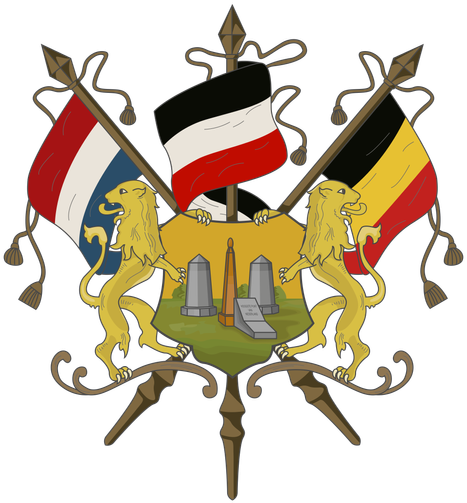
Het wapen van Neutraal Moresnet:

Een uniek symbool bij het Drielandenpunt in Vaals

Het Drielandenpunt in Vaalskent niet alleen een bijzondere geografische ligging, maar ook een rijke symbolische geschiedenis. Een opvallend voorbeeld hiervan is het wapen van Neutraal Moresnet, dat om meerdere redenen opmerkelijk te noemen is.

Op dit wapen staat namelijk niet het werkelijke Drielandenpunt bij Vaals afgebeeld, maar een toeristische en symbolische weergave ervan. Destijds werd bewust gekozen voor een iconische voorstelling, in plaats van een geografisch exacte locatie.

Het afgebeelde grenspunt: symboliek boven werkelijkheid

De grenspaal die op het wapen van Neutraal Moresnet te zien is, werd oorspronkelijk gebruikt om de grens tussen België en Nederland aan te duiden. Deze paal staat op ongeveer 50 meter afstand van het echte Drielandenpunt, waar vandaag de grenzen van Nederland, België en Duitsland samenkomen.

Deze keuze onderstreept dat het wapen vooral een symbolische betekenishad en minder gericht was op geografische nauwkeurigheid.

De Bismarcksteen en de mysterieuze nummering

Op het daadwerkelijke Drielandenpunt in Vaals bevindt zich de zogenoemde Bismarcksteen. Deze historische steen draagt het nummer 193, dat verwijst naar de grensnummering uit 1815. Deze nummering begon in Schengen en liep via Vaals langs de toenmalige oostgrens van het Koninkrijk der Nederlanden.

Daarnaast staat op de Bismarcksteen ook het nummer 1032 vermeld. Dit nummer behoort tot de nieuwe Belgische grensnummering, die startte bij Ouren.

Een ontbrekend nummer en een historisch raadsel

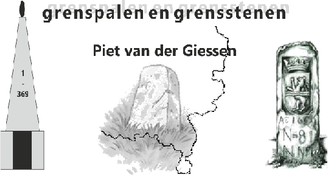
Opvallend is dat de grensnummering die vanaf Vaals richting Cadzand liep — beginnend bij nummer 1en eindigend bij 369— niet wordt vermeld op het Drielandenpunt.

Waarom deze nummering ontbreekt, blijft tot op de dag van vandaag een mysterie. Mogelijk ligt de verklaring in een historisch of politiek gevoelig onderwerp uit het verleden, dat nooit volledig is vastgelegd.

Een intrigerend stukje grensgeschiedenis

De combinatie van symboliek, grenspalen en mysterieuze nummeringen maakt het Drielandenpunt in Vaalstot veel meer dan een toeristische attractie. Het is een plek waar geschiedenis, politiek en geografie samenkomen en waar nog altijd vragen openstaan voor historici en geïnteresseerden.

Wapen+Moresnet

The Coat of Arms of Neutral Moresnet

A unique symbol at the three-country point in Vaals

The Three-Country Point in Vaals is not only notable for its unique geographical location, but also for its rich symbolic history. A striking example of this is the coat of arms of Neutral Moresnet, which is remarkable for several reasons.

The coat of arms does not depict the actual Three-Country Point near Vaals, but rather a touristic and symbolic representation of it. At the time, a conscious decision was made to use an iconic image instead of a geographically accurate location.

The depicted border point: symbolism over reality

The border stone shown on the coat of arms of Neutral Moresnet was originally used to mark the border between Belgium and the Netherlands. This stone is located approximately 50 meters from the real Three-Country Point, where the borders of the Netherlands, Belgium, and Germany meet today.

This choice emphasizes that the coat of arms was intended primarily to convey symbolic meaning, rather than geographical precision.

The Bismarck stone and the mysterious numbering

At the actual Three-Country Point in Vaals stands the so-called Bismarck Stone. This historic stone bears the number 193, which refers to the border numbering system introduced in 1815. This numbering began in Schengen and ran via Vaals along what was then the eastern border of the Kingdom of the Netherlands.

In addition, the Bismarck Stone also displays the number 1032, which belongs to the newer Belgian border numbering system, starting at Ouren.

A missing number and a historical mystery

Notably, the border numbering that ran from Vaals toward Cadzand—starting with number 1 and ending with 369—is not mentioned at the Three-Country Point.

Why this numbering is absent remains a mystery to this day. The explanation may lie in a historically or politically sensitive issue from the past that was never fully documented.

An intriguing piece of border history

The combination of symbolism, border stones, and mysterious numbering makes the Three-Country Point in Vaals far more than a tourist attraction. It is a place where history, politics, and geography converge, and where questions continue to intrigue historians and visitors alike.